What Is a Memorized Speech? How to Memorize a Speech Without Sounding Robotic
Learn what a memorized speech is, when to use one, and seven proven techniques to memorize a speech quickly, from learning the structure first to chunking and the memory palace, plus what to do if you forget a line.
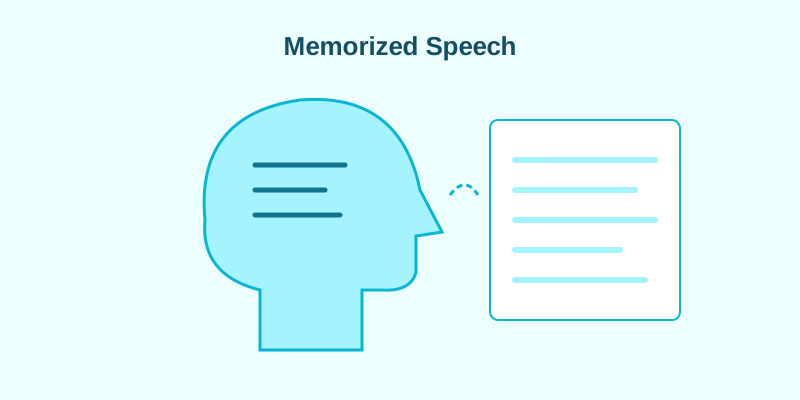
There’s something impressive about a speaker who stands up with no notes, no lectern, and no script, and delivers every line with confidence. That’s the memorized speech. Done well, it allows complete eye contact and freedom of movement. Done poorly, it sounds like a recording, or falls apart when the speaker forgets a single line.
This guide explains what a memorized speech is, when it’s the right choice, and how to memorize a speech step by step so that it sounds natural, plus what to do if your memory slips.
What Is a Memorized Speech?
A memorized speech is a speech written out in full and learned by heart, then delivered word for word without notes.
It is one of four classic delivery methods:
- Memorized: a full script, learned by heart.
- Manuscript: a full script, read aloud. See how to write a manuscript speech.
- Extemporaneous: prepared and rehearsed, delivered from brief notes. See what is an extemporaneous speech.
- Impromptu: delivered with little or no preparation.
When Should You Memorize a Speech?
Memorizing works well for:
- Short speeches, such as toasts, introductions, and award acceptances.
- Speech competitions where events require memorized delivery.
- Ceremonial speeches where you want to move freely or hold eye contact throughout.
- Key moments within longer speeches, such as your opening and closing lines.
For long, information-heavy speeches, memorizing every word is time-consuming and risky. Many speakers instead memorize their structure, opening, and closing and deliver the rest extemporaneously.
Advantages and Disadvantages
| Advantages | Disadvantages |
|---|---|
| Full eye contact | Takes significant time to learn |
| Free use of gestures and movement | Risk of forgetting lines |
| Precise wording and timing | Can sound recited or robotic |
| Polished, confident impression | Hard to adapt to the audience in the moment |
How to Memorize a Speech: 7 Techniques
1. Write for Memory
Speeches written for the ear are easier to remember. Use short sentences, clear transitions, and rhetorical devices like repetition and the rule of three. A well-organized speech is far easier to memorize than a rambling one. Our guide on how to write a speech covers writing for listeners.
2. Learn the Structure First
Before memorizing words, memorize the skeleton: your opening, each main point, and your closing. Write the structure as a short list and practice reciting it from memory.
1. Opening: story about the broken bike
2. Point 1: fixing things teaches patience
3. Point 2: asking for help is a skill
4. Point 3: small repairs build confidence
5. Close: return to the bike, now fixed
If you ever forget a line, the structure gets you back on track.
3. Chunk the Speech
Break the speech into small sections, such as a paragraph or a few sentences each. Memorize the first chunk, then the second, then practice both together. Add one chunk at a time, always practicing from the beginning. This builds the speech gradually and links each section to the next.
4. Practice Aloud, Not Silently
Speaking aloud engages your voice, hearing, and muscle memory together. Silent reading may feel productive, but it doesn’t prepare you to deliver the speech. Stand up and rehearse the way you’ll perform.
5. Use the First-Letter Method
Write the first letter of each word in a section. For example:
“Every great project starts with a small mistake.” → E g p s w a s m.
Practice reciting the speech using only the first letters as prompts. As your memory strengthens, remove them.
6. Build a Memory Palace
The memory palace (also called the method of loci) is a long-established memory technique. Picture a familiar place, such as your home, and assign each main section of your speech to a location along a route:
- Front door: your opening story.
- Kitchen: point one.
- Living room: point two.
- Bedroom: point three.
- Back door: your conclusion.
During your speech, you mentally “walk” through the house, and each room reminds you what comes next. Vivid, unusual images often work best.
7. Space Out Your Practice
Short practice sessions over several days are usually more effective than one long session the night before. Many speakers practice in short sessions daily in the week before a speech. Try practicing in different places and at different times, so your memory doesn’t depend on one setting.
How to Avoid Sounding Robotic
Memorized speeches can sound flat because the speaker is focused on recalling words, not communicating meaning. To keep it natural:
- Know what each sentence means, not just what it says.
- Use vocal variety. Mark pauses and emphasis in your script and practice them. Our guide to modulation in speech explains how.
- Practice to a real person and watch their reactions.
- Over-learn the speech. When recall becomes effortless, you have more attention for delivery.
- Vary your practice. Try delivering it slower, faster, softer, and louder, so you aren’t locked into one rhythm.
What to Do If You Forget a Line
Even well-prepared speakers sometimes blank. Here’s a plan:
- Pause and breathe. A pause feels long to you but natural to the audience.
- Repeat your last sentence. This often triggers the next one.
- Jump to the next main point from your structure.
- Paraphrase. If you remember the idea but not the words, say it in your own words.
- Don’t apologize or announce the mistake. The audience doesn’t know your script.
If you’re worried about forgetting, keep a small card with your structure nearby, if the rules allow it. Our guide on how to overcome stage fright also has techniques for staying calm.
A 7-Day Memorization Plan
| Day | Focus |
|---|---|
| 1 | Finalize the script. Memorize the structure. |
| 2 | Memorize the opening and first main point. |
| 3 | Add the second main point; practice from the start. |
| 4 | Add the third point and conclusion. |
| 5 | Run the full speech three times without notes. |
| 6 | Practice for a friend or record yourself. Work on delivery. |
| 7 | Two calm, full run-throughs. Rest. |
Adjust the plan to the length of your speech and the time you have.
Memorized Speech Checklist
- Is the script final before I start memorizing?
- Can I recite the structure from memory?
- Have I memorized the speech in chunks?
- Have I practiced aloud, standing up?
- Have I spread practice over several days?
- Can I deliver it with vocal variety, not just accuracy?
- Do I have a recovery plan if I forget a line?
Practice Exercise
Choose a short passage of about 100 words, such as the opening of a speech you’re preparing. Break it into three chunks, memorize them one at a time aloud, and then use the first-letter method to test yourself. Finally, deliver it to a friend twice: once focusing on accuracy, once focusing on meaning and expression. Ask which version sounded more natural. For more practice ideas, see our public speaking tips.
Frequently Asked Questions
What is a memorized speech?
What is the fastest way to memorize a speech?
What should I do if I forget part of my memorized speech?
Should I memorize my speech word for word?
Keep Learning
What Is an Extemporaneous Speech? How to Prepare and Deliver One From Notes
Learn what an extemporaneous speech is, how it differs from impromptu and manuscript speaking, and how to prepare one step by step: from a full outline to key-word speaking notes, with a sample note card and practice plan.
Speech DeliveryWhat Is Modulation in Speech? 5 Elements of Vocal Variety (With Exercises)
Learn what voice modulation in speech means, why it matters, and how to use its five elements: pitch, pace, volume, tone, and pauses. Includes marked examples and practice exercises to stop sounding monotone.
Speech DeliveryHow to Overcome Stage Fright: A Practical Plan for Nervous Speakers
Understand why stage fright happens and use a step-by-step plan, from preparation weeks ahead to the first thirty seconds on stage, to speak with more confidence.